Cacio e Pepe Butter Beans
These cacio e pepe butter beans are one of the simplest, most satisfying things I've made in a long time. It contains just six simple ingredients, and yet somehow those items come together to create this creamy, cheesy, deeply savory dish that you just can't get enough of.
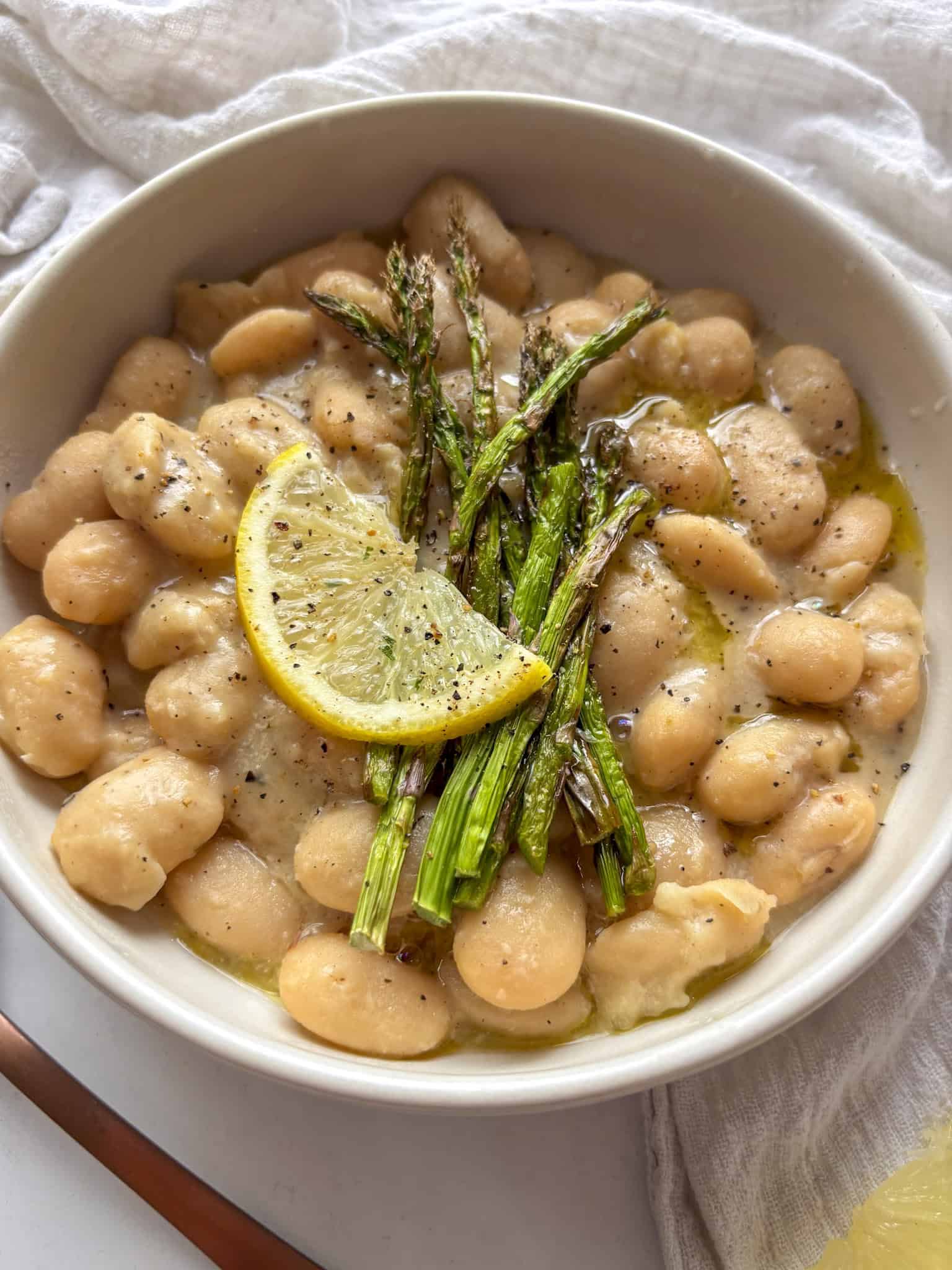
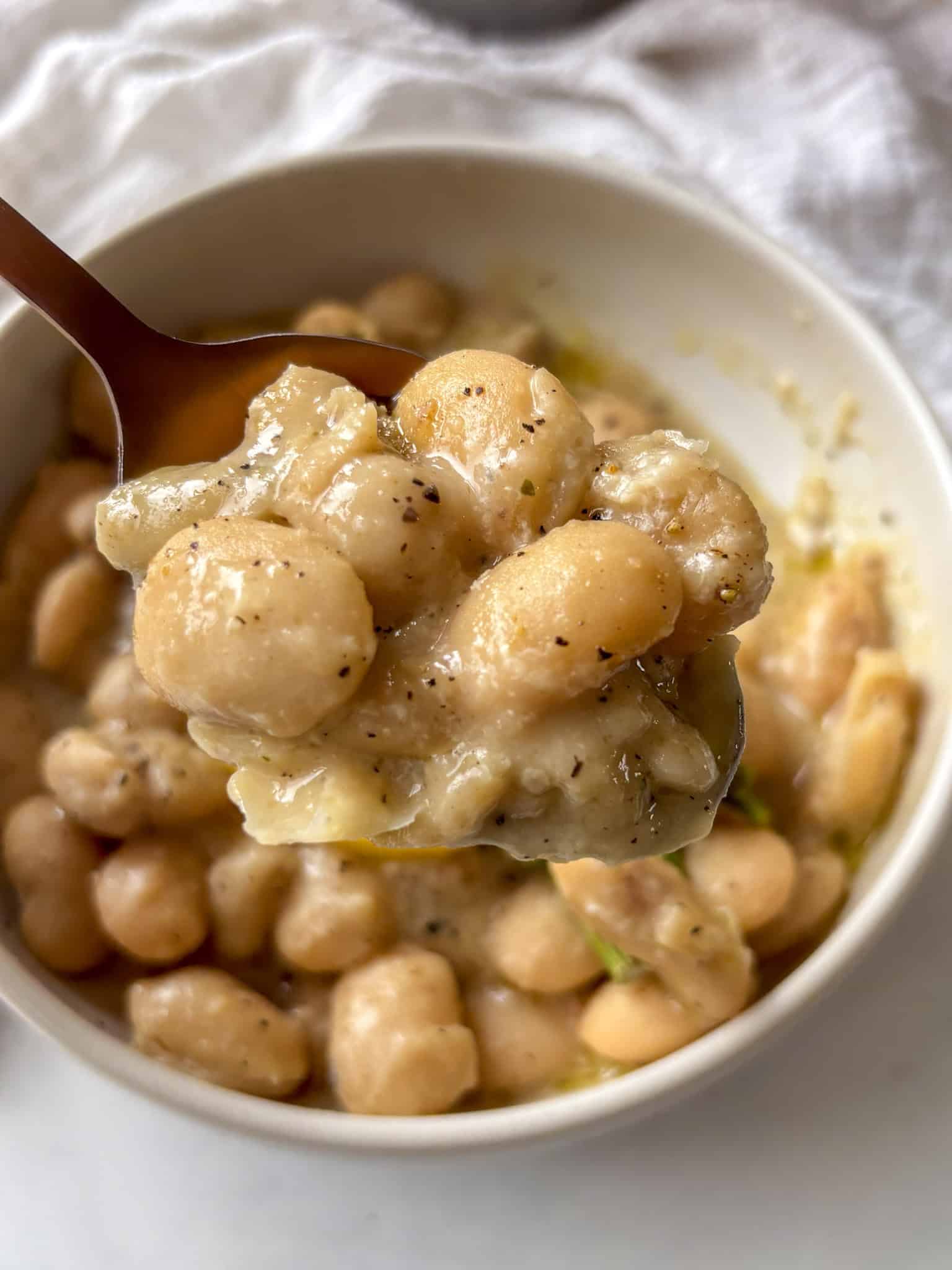
Cacio e pepe is a classic Roman pasta dish that proves you don't need a long ingredient list to make something extraordinary - just cheese, pepper, and technique. This version swaps the pasta for tender butter beans, which soak up the peppery, cheesy sauce beautifully and give you something that's hearty and protein-packed - plus, the butter beans can be partially mashed to give you this gorgeous thick and creamy texture that's incredibly moreish. It's the kind of recipe that makes you wonder why you ever bother with complicated dinners.
If you love simple, cheesy bean recipes, try my garlic Parmesan beans, pizza beans, or marry me butter beans. For more Italian-inspired dinners, my pasta e ceci and creamy pesto pasta are both reader favorites.
Why You'll Love This Recipe
This might be the most minimal recipe on my entire blog, and that's exactly why I love it. No onion, no garlic, no spice blend - just butter, pepper, stock, beans, and cheese.
The Pecorino and black pepper do everything. It's the same magic that makes the original pasta dish so beloved, but applied to creamy butter beans that soak up the sauce in a way pasta never quite can. It's a 15-minute dinner that tastes like you've done something clever.
Ingredient Notes
Here are some notes on the key ingredients. The full quantities are in the recipe card at the bottom of this page.
- Butter beans: Butter beans have a naturally creamy, velvety texture that's perfect for this dish - they absorb the cheesy, peppery sauce and become incredibly luxurious. Cannellini beans work as a substitute but are slightly smaller and less creamy.
- Butter: Real butter is essential here - it's one of only three flavoring ingredients and it adds a richness that olive oil can't replicate. This is not the recipe to use a substitute.
- Black pepper: 1 teaspoon of freshly ground black pepper - and I mean freshly ground, not pre-ground from a jar. The pepper is half the dish (it's literally in the name - "pepe" means pepper). Blooming it in the butter first releases the essential oils and gives a warm, fragrant heat rather than a sharp, dusty one. Be generous.
- Pecorino cheese: Pecorino Romano is the traditional cheese for cacio e pepe - it's salty, sharp, and tangy with a depth that Parmesan can't quite match. Grate it as finely as possible so it melts smoothly into the sauce. Parmesan works as a substitute but gives a milder, nuttier result - but keep in mind, Pecorino is much easier to find in vegetarian-friendly formats.
- Vegetable stock: This creates the saucy base and helps the cheese emulsify into a smooth sauce rather than clumping. The starch from the beans does a similar job to pasta water in the original dish.
- Extra virgin olive oil: 1 tablespoon, drizzled on top to finish. Use the good stuff here - it's a finishing oil, not a cooking oil, so the quality matters.
- Crusty bread: For mopping up the cheesy, peppery sauce. This is non-negotiable.
How to Make Cacio e Pepe Beans
Step 1: Bloom the Pepper
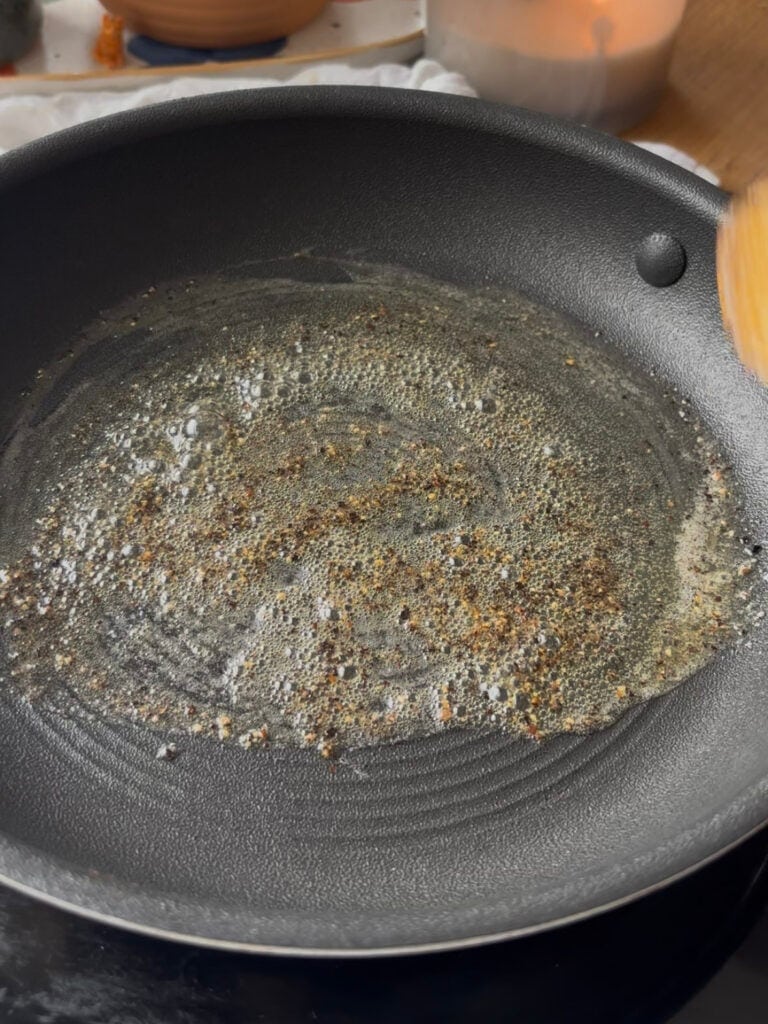
Melt the butter in a pan over medium heat. Add the black pepper and cook for about a minute, swirling the pan, until the pepper is fragrant and the butter is foaming. This step releases the pepper's essential oils and gives the dish its warm, aromatic heat.
Step 2: Add the Beans and Stock
Add the drained butter beans and vegetable stock to the pan. Stir to combine and bring to a gentle simmer. Cook for 5-8 minutes, stirring occasionally, until the stock has reduced slightly and the beans are warmed through and starting to absorb the peppery, buttery liquid.
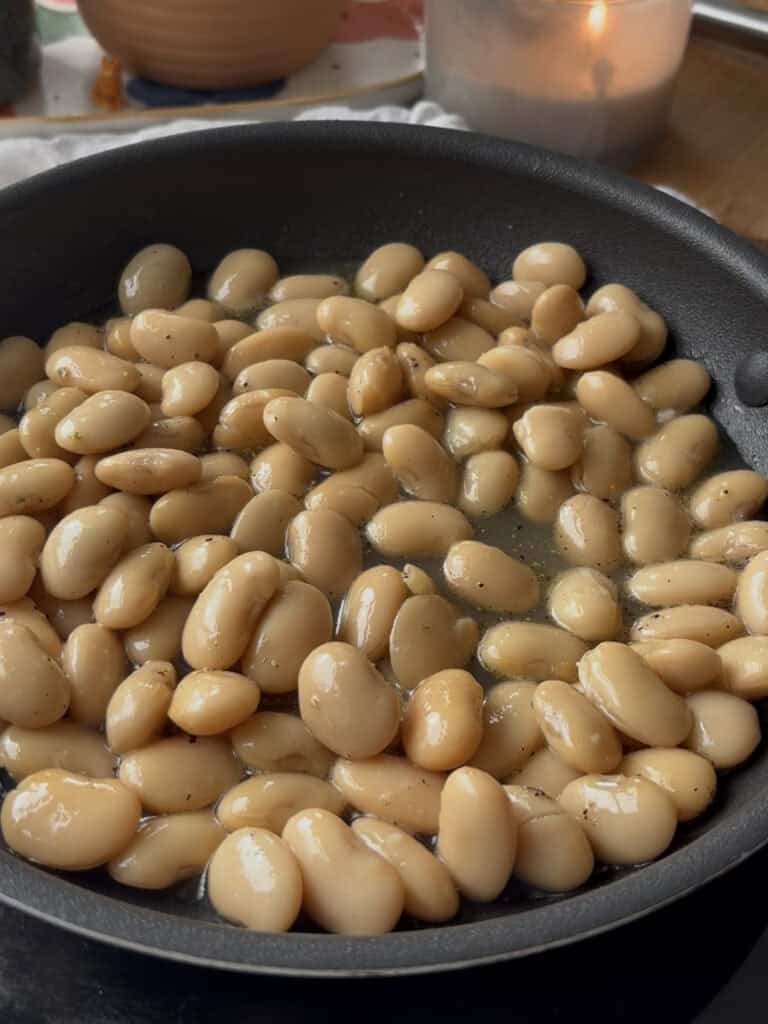
Step 3: Add the Cheese & Mash the Beans
Turn the heat down to low. Gradually add the grated Pecorino, stirring constantly, until the cheese has melted into a silky, creamy sauce that coats the beans. Adding it off high heat prevents the cheese from clumping or going stringy.
Gently mash about a quarter to a third of the butter beans (depending on what texture you want to achieve) to help thicken the sauce even more - you'll get a lovely creamy texture.
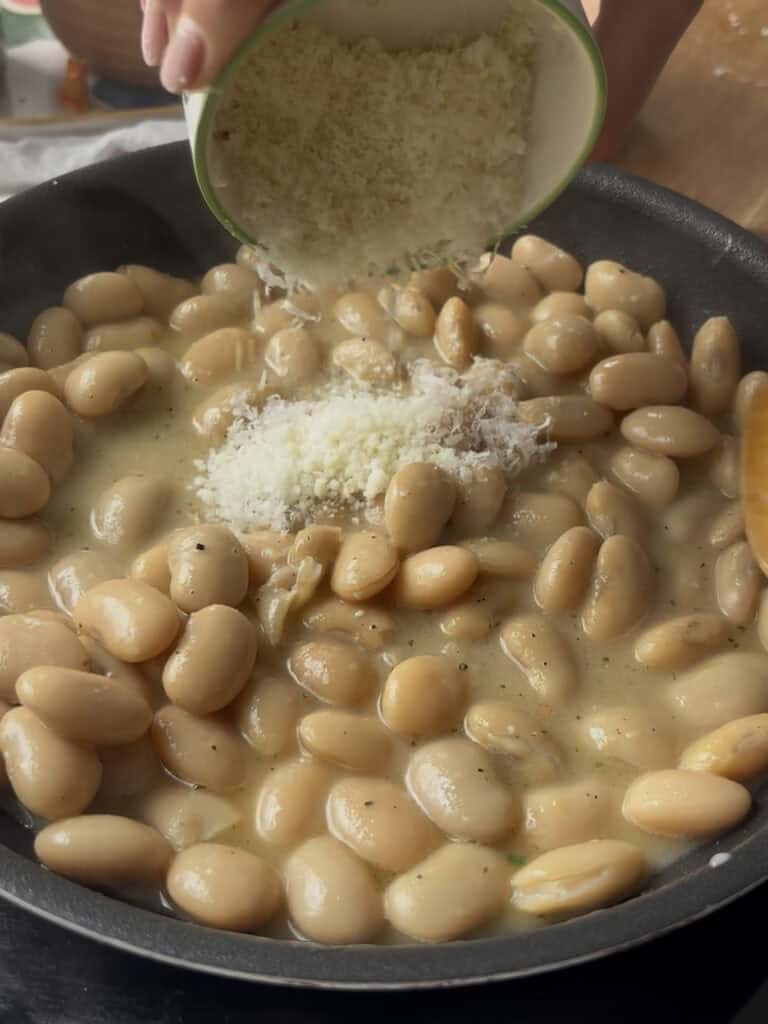
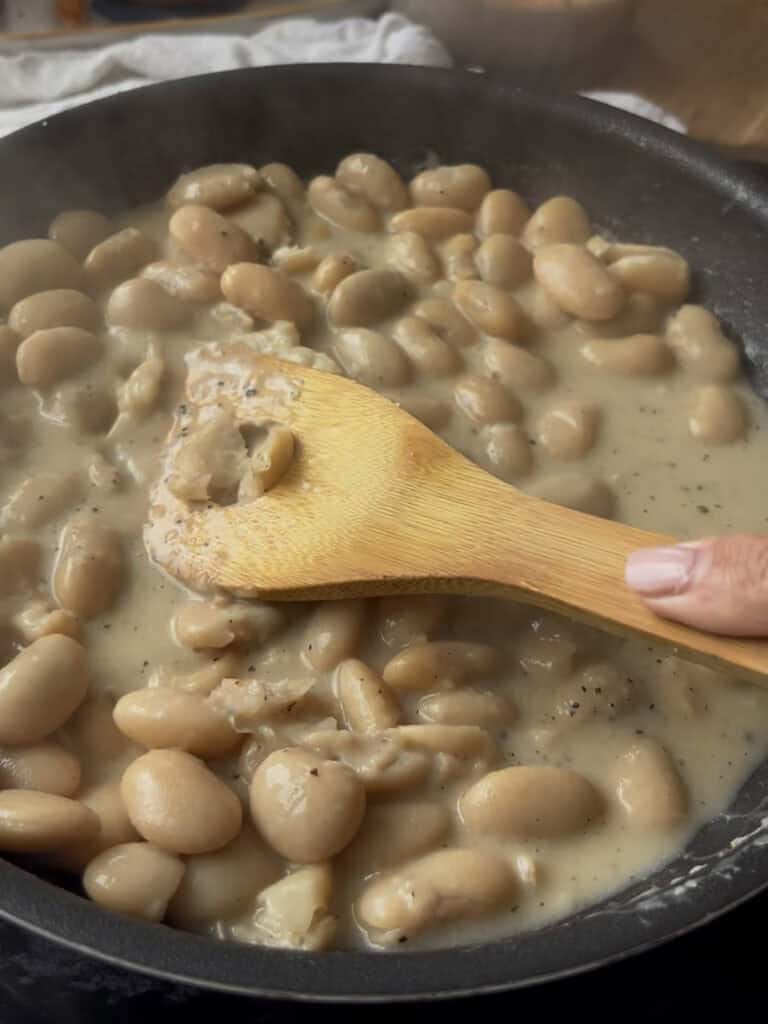
Step 4: Serve
Spoon into bowls, drizzle with extra virgin olive oil, and scatter with more grated Pecorino and a final crack of black pepper. Serve immediately with crusty bread for mopping up every last bit of sauce.
Expert Tips
- Bloom the pepper in butter: This is the most important technique in the whole recipe. Cooking the pepper in butter for a minute releases fragrant, warm essential oils that transform raw pepper from dusty and sharp into aromatic and complex.
- Use freshly ground pepper: Pre-ground pepper from a jar has lost most of its essential oils. Fresh peppercorns ground in a mill are essential - you'll taste the difference immediately.
- Grate the Pecorino very finely: The finer the grate, the more smoothly it melts into the sauce. Use a Microplane or the finest side of a box grater. Coarsely grated cheese clumps.
- Add the cheese off high heat: Turn the heat to low or remove the pan from the heat before adding the Pecorino. High heat causes the cheese to seize and go stringy rather than melting into a smooth sauce.
- Don't overthink it: This recipe works because of its simplicity. Resist the urge to add garlic, onion, or herbs. The whole point of cacio e pepe is that three ingredients (cheese, pepper, fat) can create something extraordinary.
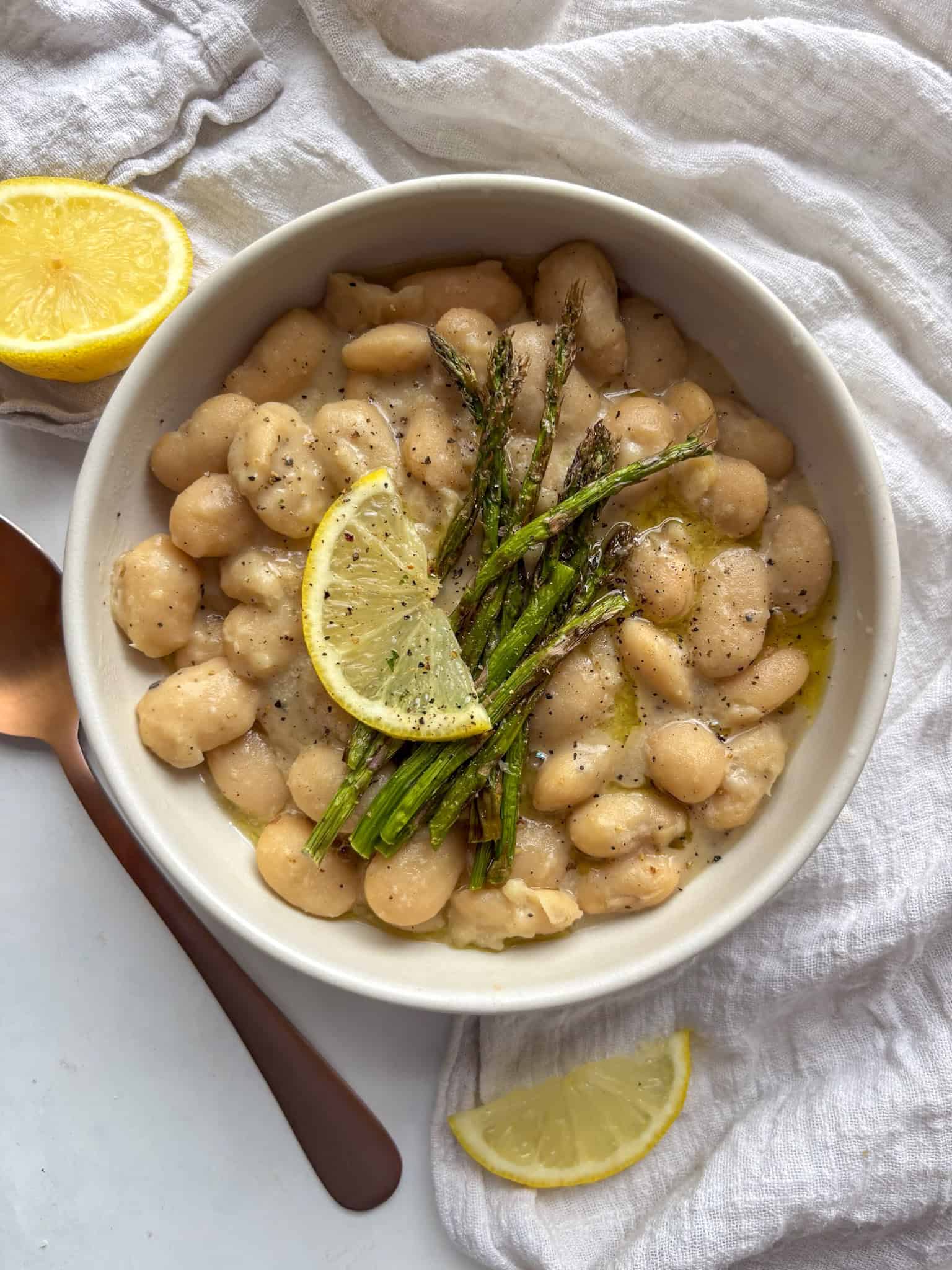
What to Serve with Cacio e Pepe Butter Beans
This is rich, so it works as a light main or a side:
- Crusty sourdough bread for mopping up the sauce (essential)
- Grilled asparagus drizzled with lemon juice and lemon zest works perfectly - it's the pairing I picked when taking the photos for this recipe and I think it's such an amazing combination.
Storage
- Refrigerator: Store leftovers for up to 3 days. The sauce will thicken as it cools - add a splash of stock when reheating to loosen it.
- Reheating: Reheat gently on the stove over low heat with a splash of stock. High heat will cause the cheese to split. Add a little extra Pecorino to refresh the sauce.
- Freezing: Not recommended - the Pecorino sauce doesn't freeze well.
FAQs
Cacio e pepe (literally "cheese and pepper") is one of the four classic pasta dishes of Rome. It traditionally uses just three ingredients: Pecorino Romano cheese, freshly ground black pepper, and pasta. The cheese and pepper are emulsified with starchy pasta water to create a silky, creamy sauce. This version replaces the pasta with butter beans.
You can, but the flavor will be different. Pecorino Romano is sharper, saltier, and tangier than Parmesan, which is milder and nuttier. Pecorino is the authentic choice and gives a more assertive, punchy result. A 50/50 blend of both is a nice middle ground. Parmesan is really vegetarian friendly, though.
The beauty of cacio e pepe is its restraint. The whole philosophy is that three ingredients (cheese, pepper, fat) can create something extraordinary when handled properly. Adding garlic, onion, or herbs would make it a different (and lovely) dish - but it wouldn't be cacio e pepe. If you want garlic and cheese beans, try my garlic Parmesan beans instead.
Cannellini beans or haricot beans both work well. Butter beans are my favorite for their creamy size and texture. Chickpeas are a bit too firm for this dish.
No - it uses butter and Pecorino. For a vegan version, use olive oil instead of butter and nutritional yeast instead of Pecorino. It won't taste the same (vegan cacio e pepe is really a different dish) but it's still tasty.
Be generous. The pepper is half the dish. One teaspoon is a starting point - taste after adding the cheese and add more if you want a bolder, more peppery result. Don't be shy!
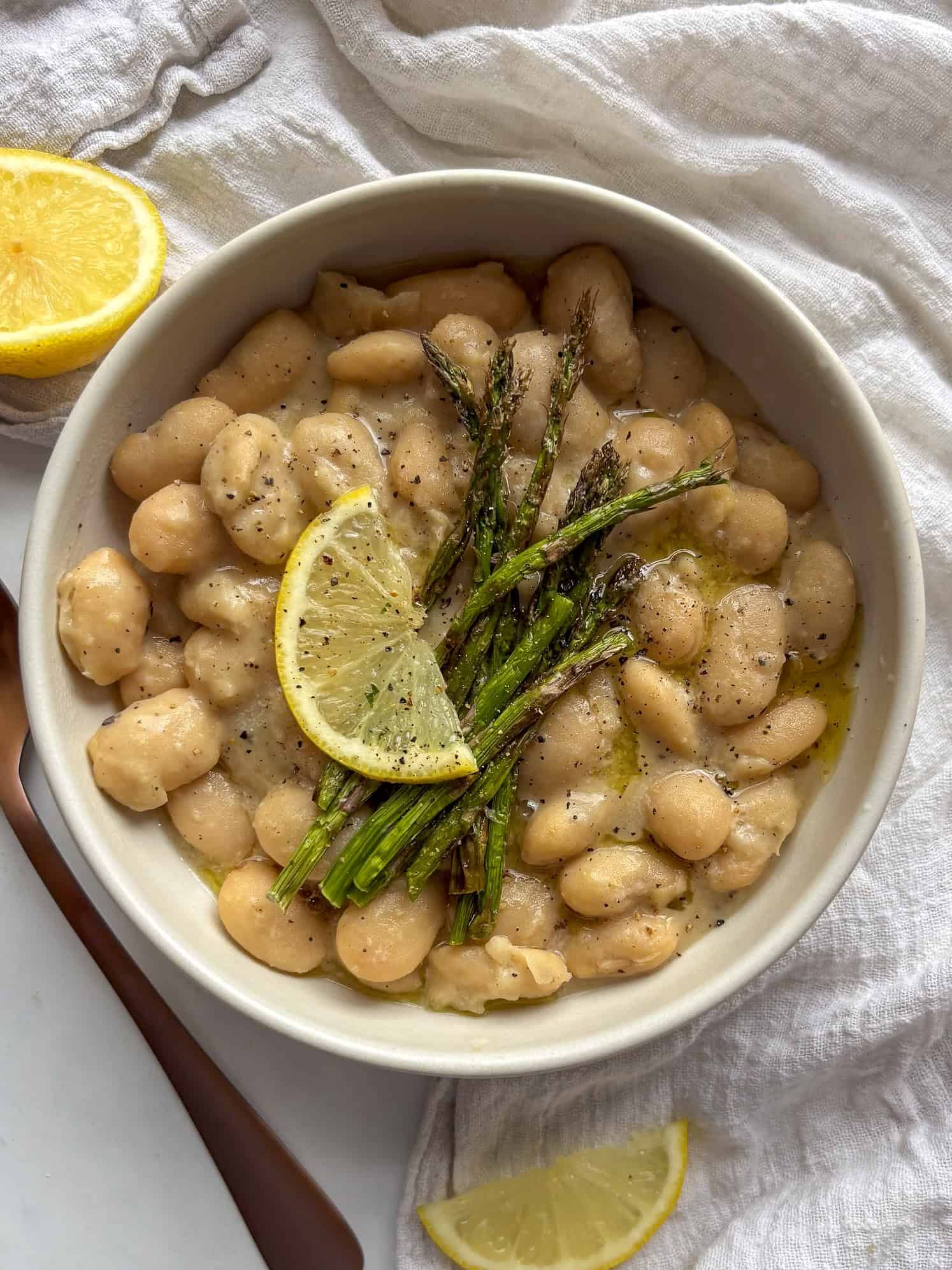
Cacio e Pepe Beans
Ingredients
- 2 tablespoon butter
- 400 g tinned butter beans drained and rinsed
- 120 ml vegetable stock
- 1 teaspoon black pepper
- 55-80 g Pecorino cheese grated, plus more for serving
- 1 tablespoon extra virgin olive oil to dress
Method
- Melt the butter in a pan over medium heat. Add the black pepper and cook for about a minute, swirling the pan, until the pepper is fragrant and the butter is foaming. This step releases the pepper's essential oils and gives the dish its warm, aromatic heat.2 tbsp butter, 1 tsp black pepper
- Add the drained butter beans and vegetable stock to the pan. Stir to combine and bring to a gentle simmer. Cook for 5-8 minutes, stirring occasionally, until the stock has reduced slightly and the beans are warmed through and starting to absorb the peppery, buttery liquid.400 g tinned butter beans, 120 ml vegetable stock
- Turn the heat down to low. Gradually add the grated Pecorino, stirring constantly, until the cheese has melted into a silky, creamy sauce that coats the beans. Adding it off high heat prevents the cheese from clumping or going stringy.55-80 g Pecorino cheese
- Gently mash about a quarter to a third of the butter beans (depending on what texture you want to achieve) to help thicken the sauce even more - you'll get a lovely creamy texture.
- Spoon into bowls, drizzle with extra virgin olive oil, and scatter with more grated Pecorino and a final crack of black pepper.1 tbsp extra virgin olive oil
Nutrition
Notes
- Pepper: Bloom in butter first. Use freshly ground, never pre-ground.
- Pecorino: Grate very finely. Add off high heat to prevent clumping.
- Stock: Helps the cheese emulsify into a smooth sauce.
- Storage: Fridge 3 days. Reheat gently with extra stock.