Gochujang Butter Beans
These gochujang butter beans are spicy, creamy, and deeply savory (three of my must-haves when it comes to comfort food dinners!). We've got tender butter beans simmered in a rich sauce of gochujang, tomato, soy sauce, and cream, finished with grated cheese and a squeeze of lemon. It's a one-pan, 20-minute dinner that's bold, satisfying, and perfect served over rice or with crusty bread for scooping.
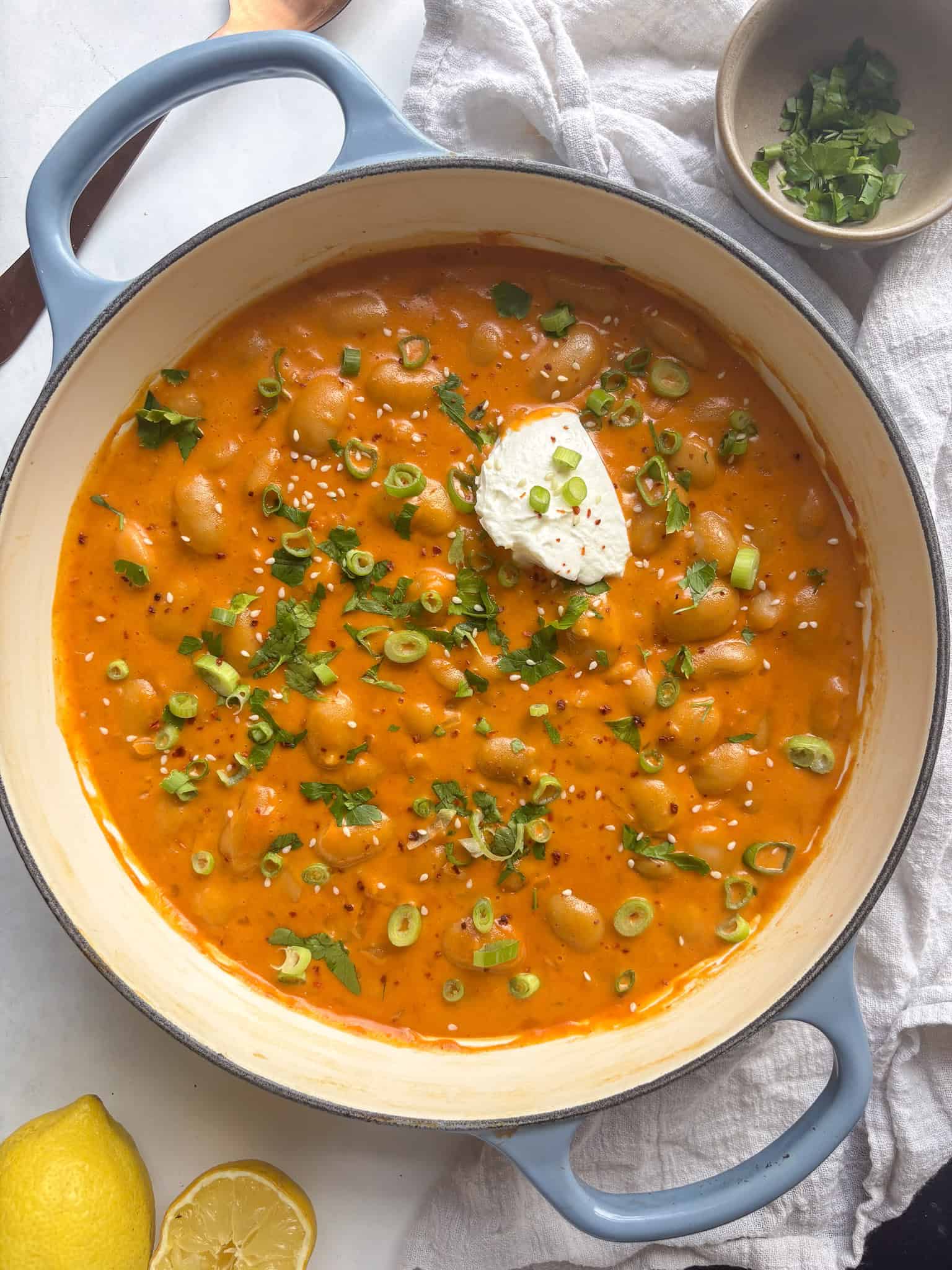
Gochujang is the star ingredient in this recipe - I saw someone say that the Marry Me flavors walked so that gochujang could run, and I couldn't agree more. It's a Korean fermented chili paste with a unique flavor that's smoky, sweet, spicy, and deeply savory all at once - nothing else quite tastes like it. Combined with soy sauce for umami, cream for richness, and a squeeze of lemon to brighten everything up, it creates a sauce that's incredibly complex for how little effort it takes.
If you love bold, creamy bean recipes, try my creamy harissa butter beans, marry me butter beans, or caramelized onion butter beans. For more butter bean dinners, my butter bean curry and one-pot butter bean lasagne are both reader favorites.
Why You'll Love This Recipe
I absolutely love the bold, spicy notes of gochujang paste - my sticky gochujang tofu has been a fav of ours at home for years. After my harissa butter beans recipe has been so popular, I was thinking of other spicy, creamy bean recipes we could try - and gochujang was a glaringly obvious option!
If you loved my harissa butter beans, this is the recipe for you. It follows the same formula - bold condiment, creamy sauce, tender butter beans - but with a completely different flavor profile. The gochujang gives the sauce a sweet-smoky heat that's distinctly Korean; the soy sauce adds deep umami, and the cream and cheese round everything out into something rich and indulgent. It's the kind of recipe where people take one bite and immediately ask for the recipe.
I've served it with crusty bread, on bread with a fried egg, and over rice. All are sublime.
Ingredient Notes
Here are some notes on the key ingredients. The full quantities are in the recipe card at the bottom of this page.
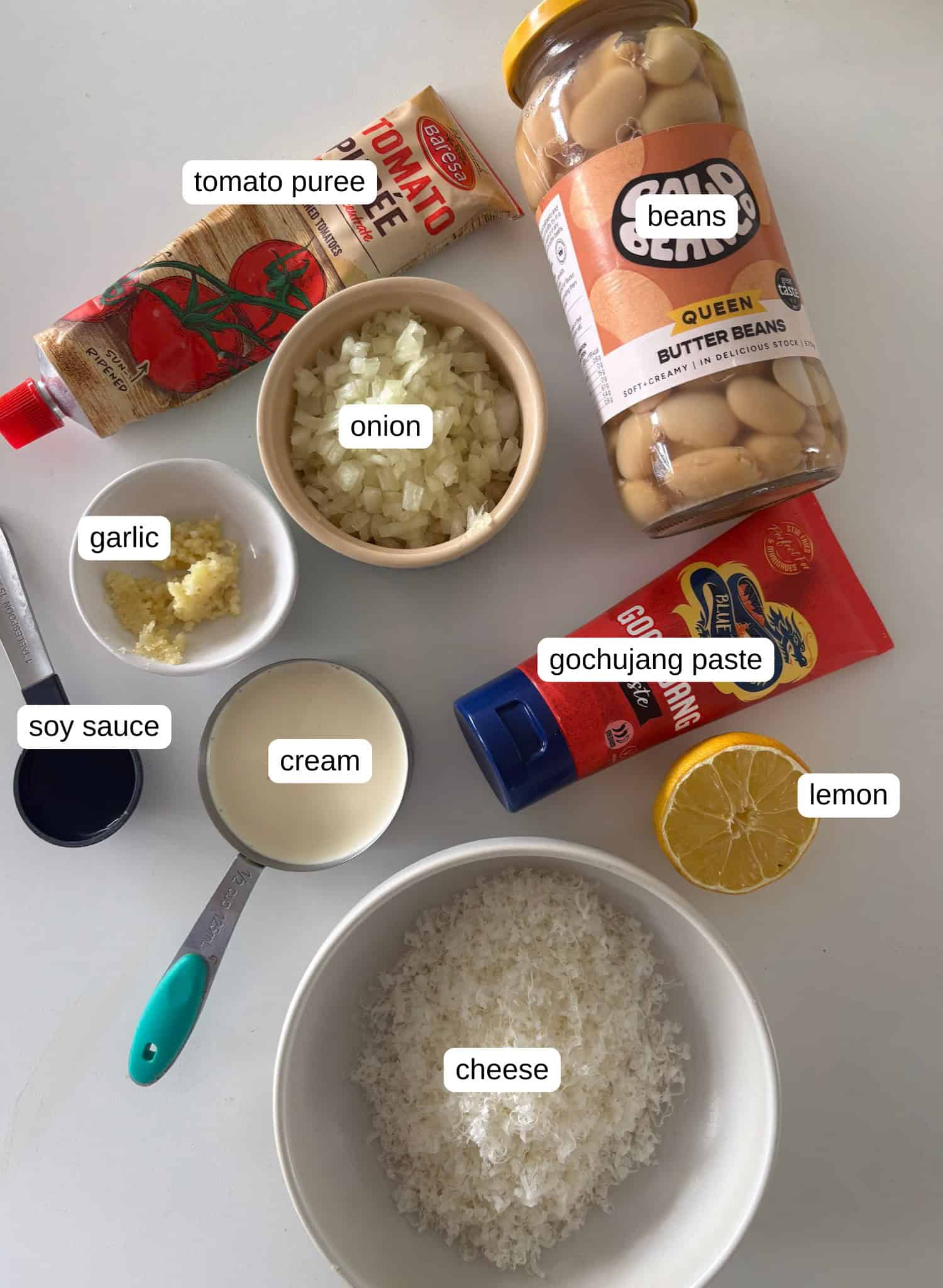
- Butter beans: Butter beans have a creamy, velvety texture that absorbs the gochujang sauce beautifully. Cannellini beans work as a substitute, though they're slightly smaller and less creamy.
- Gochujang paste: This is a Korean fermented red chili paste with a unique smoky, sweet, spicy flavor. You can find it in most UK supermarkets in the world foods or Asian aisle. Different brands vary in heat level, so taste and adjust. If you can't find gochujang, there isn't a perfect substitute - it has a very distinctive flavor.
- Soy sauce: Adds saltiness and deep umami that pairs perfectly with the gochujang. Use tamari for a gluten-free option.
- Tomato puree (paste): Cooked off with the gochujang to deepen the sauce base and add a concentrated tomato backbone.
- Heavy cream (double cream): This transforms the sauce from sharp and spicy to rich and silky. The cream mellows the heat of the gochujang while keeping the flavor bold.
- Hard cheese: Pecorino or Parmesan both work. Stirred in at the end for a salty, savory depth that ties the sauce together. This is an unexpected addition that makes the sauce incredibly moreish.
- Lemon juice: Added at the end to brighten the rich sauce and balance the sweetness of the gochujang.
- Butter and olive oil: Using both gives you the flavor of butter with the higher smoke point of olive oil.
- Onion and garlic: One white onion, diced, and three garlic cloves, minced. The classic aromatic base.
- Stock or water: About half a cup (125ml) to loosen the sauce and give the beans room to simmer.
To garnish: Cilantro (coriander), Scallion (spring onion), and sesame seeds.
How to Make Gochujang Butter Beans
Here's a quick overview of making this comfort food dinner! Scroll down to the recipe card for the exact ingredient quantities and instructions.
Step 1: Sauté the Base
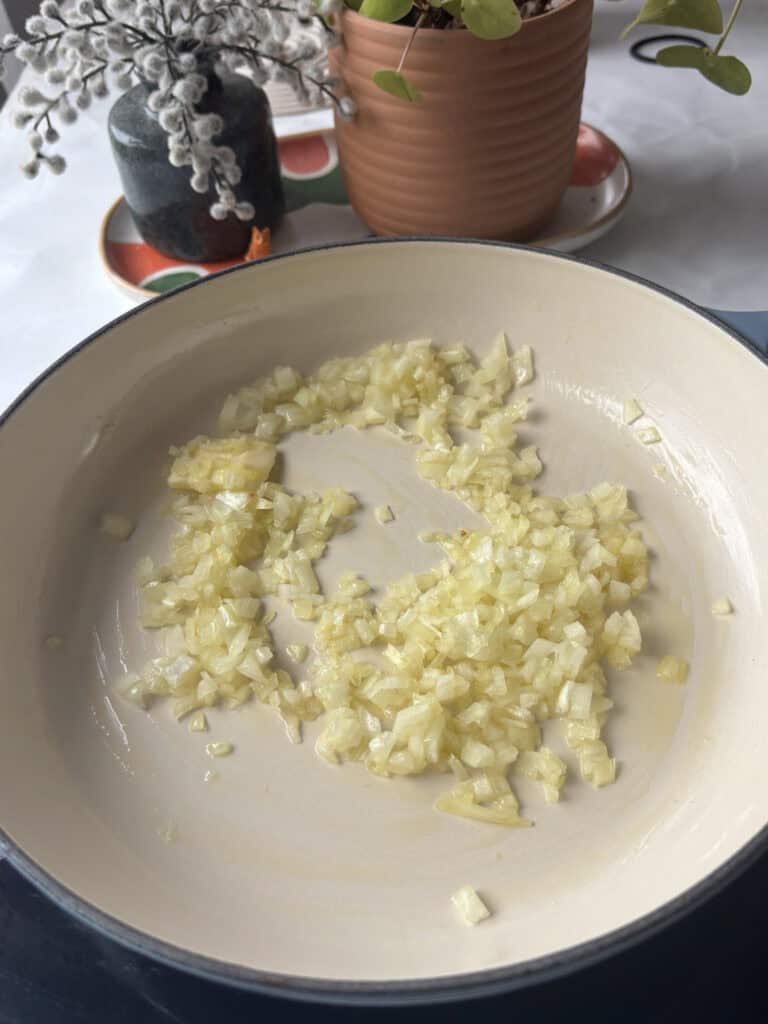
Add the olive oil and butter to a pan over medium heat. Once the butter has melted, add the diced onion and sauté for 3-4 minutes, stirring occasionally, until softened. Add the minced garlic and cook for another 1-2 minutes until fragrant.
Step 2: Cook the Pastes
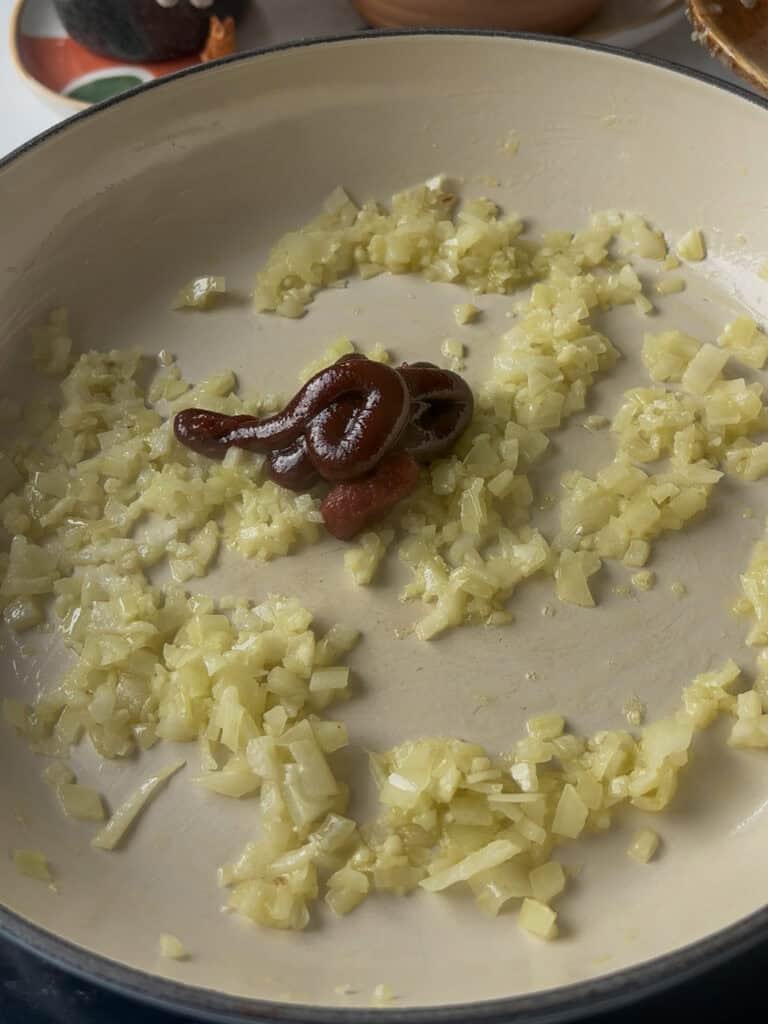
Add the tomato puree and gochujang paste, stirring them into the onion mixture. Cook for about a minute until the pastes have turned fragrant and deepened in color. This step blooms the gochujang's smoky, spicy flavor.
Step 3: Simmer the Beans
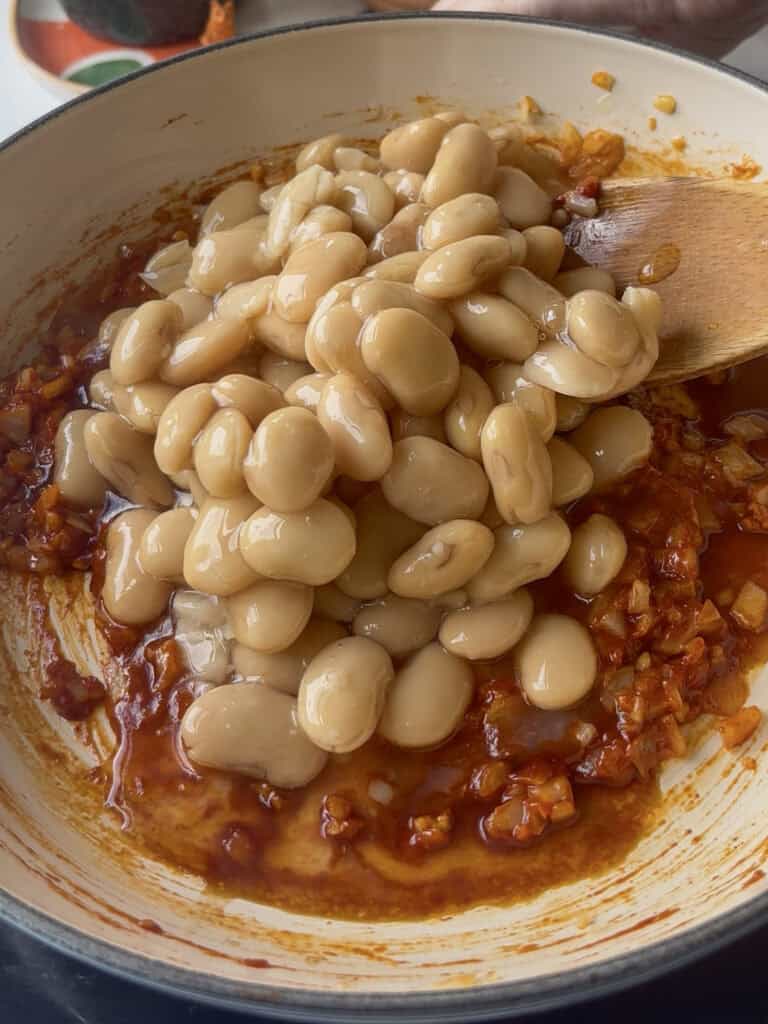
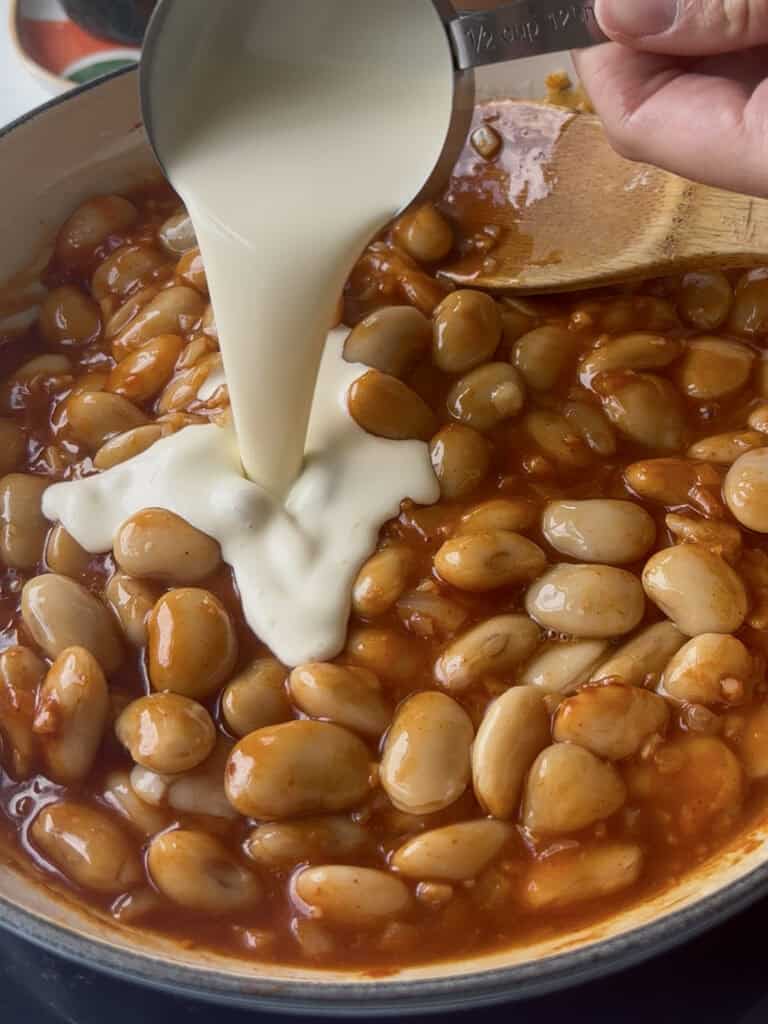
Add the soy sauce, drained butter beans, stock, and cream. Stir everything together and leave to simmer for 10 minutes until the sauce has thickened and the beans are tender and coated in the creamy gochujang sauce.
Step 4: Finish the Sauce
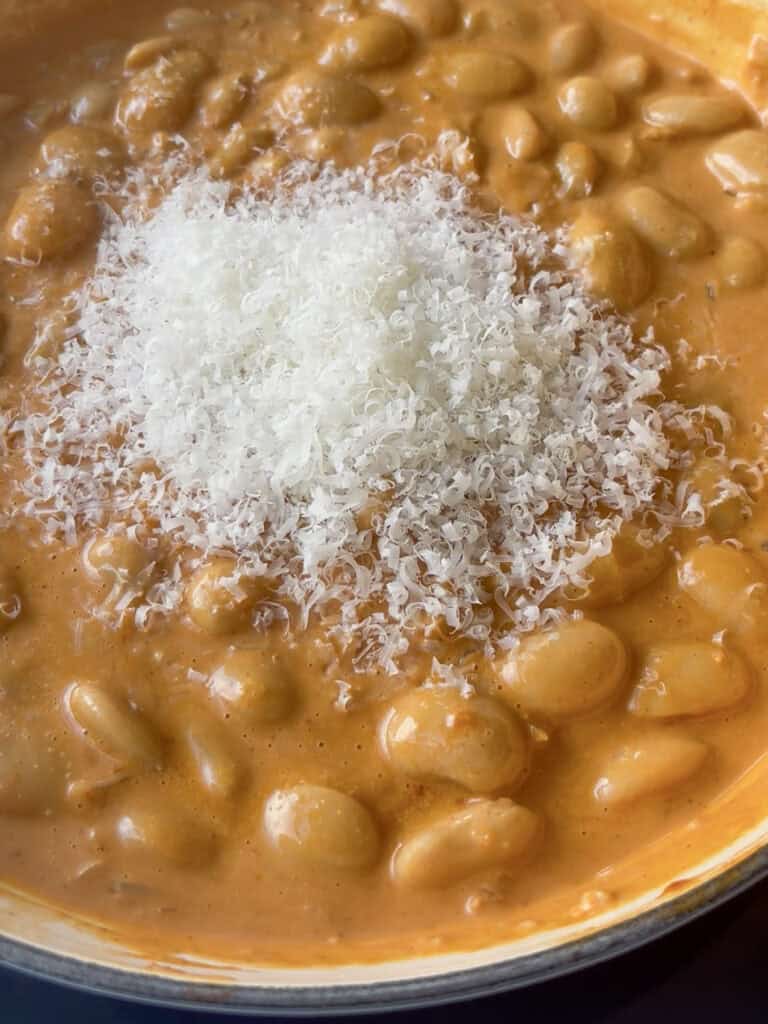
Stir in the grated cheese and lemon juice. The cheese melts into the sauce and adds a salty, savory depth, while the lemon brightens everything up.
Step 5: Garnish and Serve
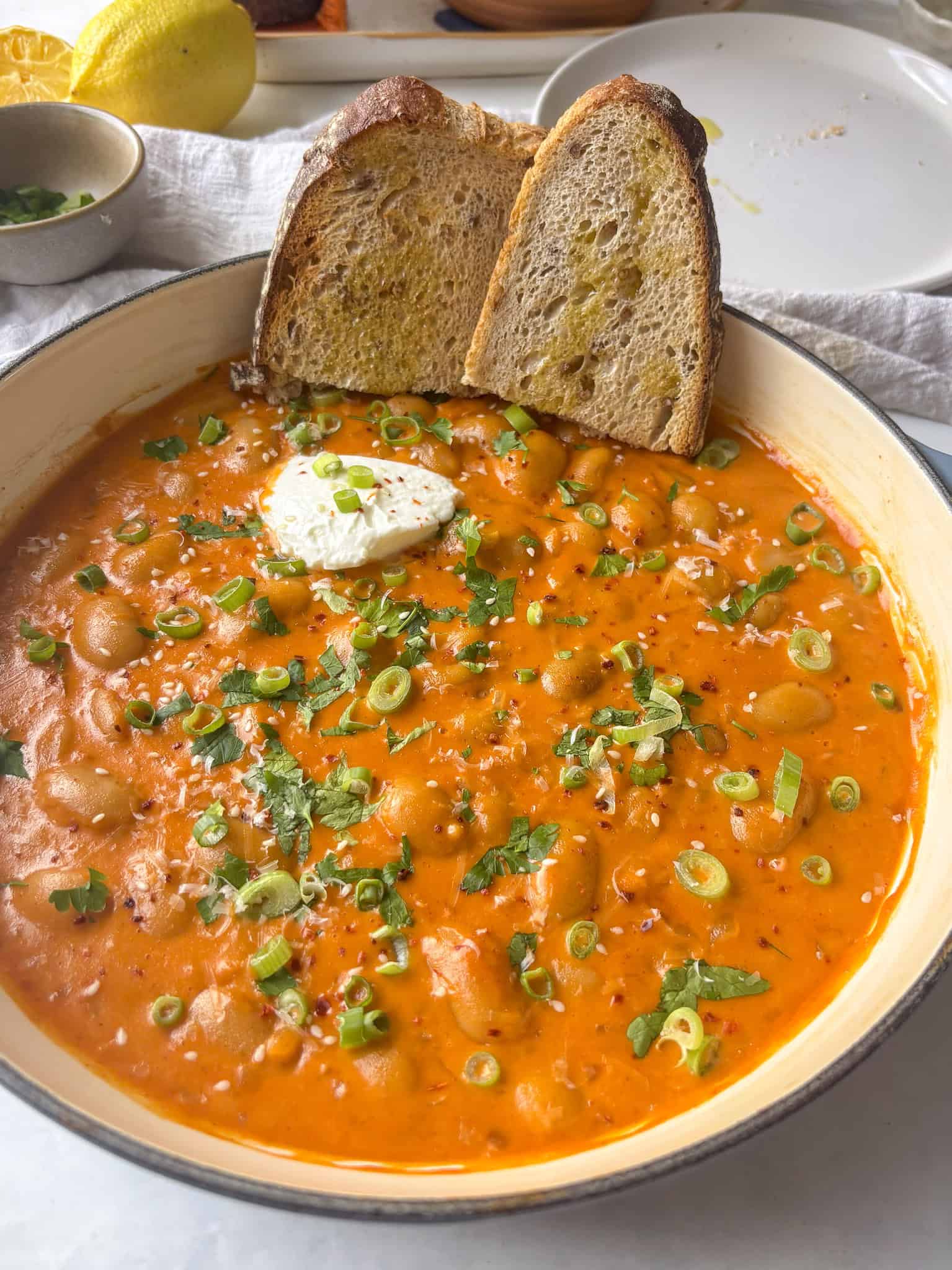
Scatter over the chopped cilantro, sliced scallion, and sesame seeds. Serve immediately over rice or with crusty bread.
Expert Tips for the Best Gochujang Butter Beans
- Cook the gochujang before adding liquid: Frying the gochujang paste with the tomato puree for a minute before adding the cream and stock brings out its flavor and deepens the smoky heat. Skipping this step means a flatter, less complex sauce.
- Don't skip the cheese: It sounds like an unusual addition to a Korean-inspired dish, but grated hard cheese melted into the sauce adds an umami backbone that's incredibly moreish. Trust the process - it's an ingredient that should not be skipped!
- The lemon juice at the end is essential: Gochujang is sweet and rich. The lemon cuts through that richness and lifts the whole dish. Without it, the sauce can feel one-dimensional.
- Adjust the gochujang to your heat tolerance: Different brands vary hugely in spice level. Start with 2 tablespoons, taste during simmering, and add more if you want a spicier result.
What to Serve with Gochujang Butter Beans
These butter beans are best served with:
- Steamed white or jasmine rice (the classic)
- Crusty bread or sourdough toast for scooping (my personal fav!)
- Over noodles for a fusion twist
- With a fried egg on top for extra protein and richness
- A simple cucumber and sesame side salad
Storage
- Refrigerator: Store leftovers in an airtight container for up to 4 days. The flavors develop and deepen overnight.
- Freezer: Freeze in portions for up to 3 months. Defrost overnight and reheat gently on the stove.
- Reheating: Reheat on the stove over low heat with a splash of water or stock if the sauce has thickened. The cream sauce can split on high heat, so keep it gentle.
FAQs
Gochujang is a Korean fermented red chili paste made from red chilies, glutinous rice, fermented soybeans, and salt. It has a unique flavor that's smoky, sweet, spicy, and deeply savory - nothing else quite tastes like it. You can find it in most UK supermarkets in the world foods or Asian aisle, or at Asian grocery shops.
It has a moderate, building heat from the gochujang. The cream and cheese mellow it significantly. For milder, use 1 tablespoon of gochujang. For spicier, add an extra tablespoon or a pinch of chili flakes.
Cannellini beans or chickpeas both work well. Butter beans are my favorite for their creamy texture and size - they make the dish feel much more substantial and satisfying.
Use coconut cream instead of heavy cream, skip the cheese (or use nutritional yeast), and use olive oil instead of the butter. Check your gochujang brand too - most are vegan but some contain shrimp paste.
Same formula, completely different flavors! My harissa butter beans are North African-inspired with smoky harissa heat. These gochujang butter beans are Korean-inspired with a sweet-smoky-fermented character. If you loved one, you'll love the other.
Gochujang Butter Beans
Ingredients
- 1 tablespoon olive oil
- 1 tablespoon butter
- 1 white onion diced
- 3 garlic cloves minced
- 1 tablespoon tomato puree
- 2 tablespoon gochujang paste
- 2 tablespoon soy sauce
- 350 g butter beans
- 125 ml water or vegetable stock
- 100 ml heavy cream double cream
- 50 g hard cheese grated
- ½ lemon juice
- 10 g cilantro to garnish
- 1 scallion thinly sliced, to garnish
- 1 teaspoon sesame seeds to garnish
Method
- Add the olive oil and butter to a pan, then add the diced white onion. Saute for 3-4 minutes, stirring occasionally, then add the minced garlic and cook for another 1-2 minutes.1 tbsp olive oil, 1 tbsp butter, 1 white onion, 3 garlic cloves
- Add the tomato puree and gochujang paste, stirring them into the onion mixture. Cook for a minute until the pastes have turned fragrant and deepened in color.1 tbsp tomato puree, 2 tbsp gochujang paste
- Add the soy sauce, butter beans, stock, and heavy cream. Leave to simmer on low heat for 10 minutes until the sauce has thickened. Stir occasionally.2 tbsp soy sauce, 350 g butter beans, 125 ml water or vegetable stock, 100 ml heavy cream
- Add the grated cheese and lemon juice to the pan, stirring both into the sauce.50 g hard cheese, ½ lemon
- Scatter over the cilantro, sesame seeds, and sliced scallions to garnish and serve.10 g cilantro, 1 scallion, 1 tsp sesame seeds
Nutrition
Notes
- Cooking the Gochujang Paste: I would recommend cooking the tomato puree and gochujang paste for about a minute with the onion and garlic before adding liquid - this blooms the flavor and gives the sauce a more intense, bold flavor.
- Cream: In this recipe we've used heavy cream (double cream), not coconut milk, for the richest result. You could swap it out for coconut milk if you prefer though.
- Cheese + lemon: Don't skip either - the cheese adds umami, the lemon lifts the richness. It's a lovely addition to a bold and spicy sauce to balance everything out.
- Storage: Fridge 4 days, freezer 3 months. This is one of those recipes that tastes even better the next day!


Loved this. I had every ingredient on hand so bonus for that. I didn’t drain the beans and just topped up with a tiny bit of water, but had to simmer them back down as it was a touch loose. But really tasty and spicy (I overdid gojuchang).
Another winner for me!
I just made this tonight. So good, so easy. Thanks for sharing.